|
Yellowface |
by R. F. Kuang |
 |
Discussion Questions |
1) Roland Barthes published the essay "The Death of the Author" in 1967 on whether the author's identity and biography are relevant to the meaning of a text. What do you take the "death of the author" to mean? Do you agree? How much does the identity and biography of the author affect how you interpret a text, if at all? Does it change things if the author is still living? If they died over a century ago? 2) June feels betrayed by Athena for writing a story about a traumatic experience she suffered during college. Do you think what Athena did was wrong? Robert Kolker's 2021 piece "Who is the Bad Art Friend?" also raised questions about whether it is ethical to publish fiction drawn explicitly from someone else's life. What obligations, if any, do authors have towards living subjects who inspire their stories? 3) Can we ever argue that someone does or doesn't have the write to tell a certain story? Where do we draw the line between this and censorship? What makes for "bad" literary representation? What constitutes the "harm" done by bad literary representation? 4) Much of June's anxiety about her writing career comes from paranoia about how other authors perceive her and compare against her. John Banville once offered the following advice for young writers: "I remind them, as gently as I can, that they are on their own, with no help available anywhere." Is writing a necessarily solitary activity? 5) The text employs recurring imagery of masks and skin; June imagines unzipping Athena's skin and pulling it on over herself. Consider also films like Jordan Peele's Get Out and James Cameron's Avatar, which explore (to differing critical degrees) the white desire to slip into another skin. In what ways is this trope salient to understanding racialization today? 6) June justifies finishing Athena's manuscript by arguing it is better for her story to reach the world than to linger unpublished, or to be posthumously published in unfinished form. Do you agree? 7) June and Athena's friendship seem defined by way they constantly hurt each other. Why do you think they were drawn to each other? Why did they keep seeing one another? 8) Athena in many respects rankles against her canonical status as an Asian American author. She rants about being pigeonholed; she rejects overtures by younger Asian American writers. Why might she feel resentful towards her own community? Discussion Questions by the Publisher Book Club Talking Points:
Yellowface is an excellent book club pick. Due to its thought-provoking themes and compelling storyline - it will spark meaningful discussions on race, identity, and the impact of cultural stereotypes. It offers a unique perspective on these important issues, making it an interesting choice for book club members. |


|
 |
Looking for your next group read? Explore 4+ years of curated picks that actually spark a conversation ....
|
More Must-Read Books |
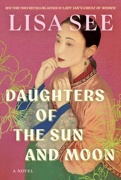 Daughters of the Sun and Moon
Beloved New York Times bestselling author Lisa See draws on the vibrancy and turmoil of post-Civil War Los Angeles to tell the story of three Chinese women who managed to survive and, eventually, thrive, despite all odds. ...More
|
 The Book WitchShe can hop into any novel, she just can't stay there. Come along with the book witch in this magical and inspiring love letter to reading from the USA Today bestselling author of The Wishing Game ... More
|
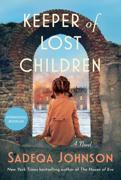 Keeper of Lost Children
In this new novel from the New York Times bestselling author of The House of Eve, one American woman's vision in post WWII Germany will tie together three people in an unexpected way....More
|
 My Husband's WifeThe New York Times bestselling Queen of Twists is back with a psychological masterpiece that will leave you questioning everything you know about love, identity, and revenge. By the author of His & Hers, now a #1 Netflix show!... More
|
You May Also Like: |


|
Visit Our Blog |
 |
Most Antipipated Books of 2026 ..... Our Favorites.
|