
 |
The Bright Years |
by Sarah Damoff |
 |
Discussion Questions |
1. What other novels do you think The Bright Years is in conversation with? In what ways? 2. Why do you think Lillian withheld the reality that she had placed a baby for adoption from those closest to her? Do you think she was wrong to do so? 3. When Lillian miscarries, there is a passage (p. 41) where time is moving backward. Why do you think the author chose to do this here? Were there other instances in the book when the treatment of time stood out to you? 4. Why do you think Ryan started drinking after his resolve to stay teetotal? Was there one cause or multiple? 5. Lillian thinks, "Abuse is much easier to identify when it's not in your own kitchen." What does this mean, and why do you think it's so often the case? 6. Do you think it was noble, cowardly, both, or neither for Ryan to leave his family? 7. On page 66, Lillian thinks, "I hate him. But hate is anemic when love hangs around like turpentine in the upholstery." And on page 97, Ryan begs Lillian to hate him. She replies that she does, but she also loves him. How does this complexity of heart follow them throughout the story? 8. Why do you think Lillian and Jet grew so close to Shauna and Kendi, and how did these friendships impact them? 9. At Barton's funeral, Lillian has a realization as she watches Ryan grieve. It reads, "It was our pain that pulled us together like magnets, that medicinal click of solidarity between two hurting people. That's what happened in the library, the restaurant, his mother's house. But as powerful as pain might be, it was never going to keep us together. It grew strong enough to flip the magnets, pushing us apart as forcefully as it had pulled us in. The thing that built us destroyed us, and somehow, we didn't see it coming." Why do you think pain was such a connecting force for them, and was there anything they could have done differently with that? 10. Lillian tells Jet that "love doesn't always feel like we expect." How does this come up in the parent-child relationships? How does it come up in the romantic relationships? 11. On page 128, Lillian tells Jet, "Love is time shared, and we make our choices." What does this mean? Lillian goes on to think, "I'm looking at one of mine in her tender round face." In what ways did Lillian choose Jet throughout the novel?12. Which character did you relate to the most? 13. After Lillian's death, Jet tries to distance herself from reminders of her past and her mom. In what ways was she helped when she allowed herself to eventually take photographs again? 14. "Time can wash dirt off of a memory until it is revealed as something else entirely." Does this resonate with you? Discuss instances when memory has surprised you. 15. What did Davis benefit from meeting Jet, if anything? What did Jet benefit, if anything? 16. Why do you think it took Jet so long to open the envelope from her mother? 17. On page 203, Jet thinks about how Elise's love "is composed of practicalities." How did Elise's choices impact the generations after her? Why do you think grandmothers are so often a stabilizing force in a family? 18. Jet observes her dad and wonders, "What's the difference between an excuse and a reason?" What do you think the answer to this question is? 19. At Elise's funeral, Kendi points out to Jet that Ryan is "here and not drunk." Jet says this is a "pretty low bar." And Kendi asks her, "Is it?" Why do you think Kendi's question follows Jet? Do you think it's a low bar?] 20. Jet has a watershed moment as she photographs a wedding. It reads, "This is not good. In one fell swoop, this bride has chopped down my delusion like it was a sick tree. I do not, as it turns out, have a monopoly on pain. It's not some secret knowledge of mine. These people have heard the stats too. Have felt the stats. They know it hurts whether promises are broken or kept-they make them anyway." Why do you think pain feels so isolating? What does it mean for Jet when she realizes that the people around her have also suffered? 21. Jet thinks, "It's the fear beneath all fears-that I'll hurt Kendi. That I'll be the Ryan to his Lillian." What does she mean by this? Is it a valid concern? 22. At the end of Jet's section, she is training to be a midwife. At a patient's prenatal appointment, she thinks of Lillian. "Her heart is buried in the darkness of the earth, but it is also buried in the darkness of my body. Everyone says "gone but not forgotten," though it's ultimately the other way around: generations later, a mother is forgotten but not gone, a pulse in the bodies birthed from her love. Shit. I might want to have children. All that resurrection." Why does she use the term resurrection in this context? What does it mean to her here? 23. What role does art play in the lives of these characters? 24. In reference to Ryan at his father's funeral, Lillian thinks, "There are two kinds of grief at a wake: grieving the loss of what was and grieving the loss of what wasn't." Later, when Jet finally opens her mother's envelope, she confesses, "It's not that she didn't tell me. It's that she hadn't told me yet. It's that she died too soon...That's why I've actually been mad." Why do you think it's common for grief to be wrapped in anger? 25. Ryan says, "I get desperate to feel better and then desperate to feel bad, and alcohol is the potion that gives me both." Are there other things besides alcohol that give this to people? Why do you think some people seek this out? 26. Ryan is profoundly sorry for how he hurt his wife and daughter. Do you think this makes a difference? Why/why not? What limitations are there to his regret? 27. Ryan writes to his granddaughter about the neutrality of alcohol, placing more of the blame on his relationship with the substance, and on his lifelong need for comfort. How is this similar or dissimilar to how you've learned to view alcoholism? 28. Which relationship did you see as central in the book? Why? 29. How did the ending of the story impact you? In the classic sense, would you call this book a tragedy or comedy? Did the ending make you see anyone or anything differently in your own life? 30. What's one question you would ask the author of this novel? Discussion Questions by the Author Book Club Talking Points:
"The Bright Years" by Sarah Damoff is a feel-good, thought-provoking book that's perfect for book clubs. It follows characters going through significant life changes-something most of us can relate to-and explores themes such as finding joy, starting anew, and embracing change. It's the kind of story that sparks honest conversations about resilience and personal growth, regardless of your stage in life. |


|
 |
Explore 4+ years of curated picks that actually spark a conversation.
|
More Must-Read Books |
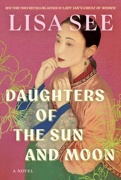 Daughters of the Sun and Moon By Lisa See
Beloved New York Times bestselling author Lisa See draws on the vibrancy and turmoil of post-Civil War Los Angeles to tell the story of three Chinese women who managed to survive and, eventually, thrive, despite all odds. ...More
|
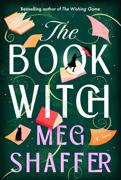 The Book Witch By Meg Shaffer She can hop into any novel, she just can't stay there. Come along with the book witch in this magical and inspiring love letter to reading from the USA Today bestselling author of The Wishing Game ... More
|
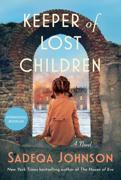 Keeper of Lost Children By Sadeqa Johnson
In this new novel from the New York Times bestselling author of The House of Eve, one American woman's vision in post WWII Germany will tie together three people in an unexpected way....More
|
 My Husband's Wife By Alice Feeney The New York Times bestselling Queen of Twists is back with a psychological masterpiece that will leave you questioning everything you know about love, identity, and revenge. By the author of His & Hers, now a #1 Netflix show!... More
|
You May Also Like: |


|
Visit Our Blog |
 |
Most Antipipated Books of 2026 ..... Our Favorites.
|
|
|


