
 |
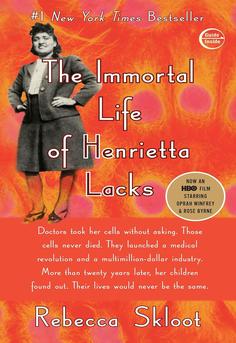
The Immortal Life of Henrietta Lacks |
|
by Rebecca Skloot
|
|
Book Review |

|
|
(by Andrea)
|
|
The Immortal Life of Henrietta Lacks by Rebecca Skloot is an excellent audiobook. The narration is superb, and the story of Henrietta Lacks, her family, and the fate of her cells (known as HELA to the science community) is compelling. I was unaware of HELA cells or Henrietta Lacks' life story before listening to this book. Apparently, most of the world hadn't heard of Henrietta either, despite her enormous contribution to medical research. Ms. Skloot tells the story of Henrietta, a black woman living in poverty during the 1950s, who is sick and unable to pay for health care.
While receiving treatment at John Hopkins, her cells are taken for research without her consent or knowledge. The cells become responsible for countless medical breakthroughs for diseases such as cancer, polio and more. The results are immeasurable, yet it isn't until years later her identity is revealed. As the author recounts this story, she touches upon controversial topics such race and ethics in the medical community. The author does a terrific job of describing the medical jargon in simple layman's terms while keeping the story interesting and thought provoking. This is an astonishing and informative book. It would make an excellent book club choice and will surely spur a lively discussion with your group. |
Book Summary |
|
Broadway Books (March 8, 2011) - Non-Fiction - 381 pages
Her name was Henrietta Lacks, but scientists know her as HeLa. She was a poor Black tobacco farmer whose cells-taken without her knowledge in 1951-became one of the most important tools in medicine, vital for developing the polio vaccine, cloning, gene mapping, and more. Henrietta's cells have been bought and sold by the billions, yet she remains virtually unknown, and her family can't afford health insurance. This phenomenal bestseller tells a riveting story of the collision between ethics, race, and medicine; of scientific discovery and faith healing; and of a daughter consumed with questions about the mother she never knew. |
Discussion Questions |
|
1. On page xiii, Skloot writes, "This is a work of nonfiction." Consider the process she used to verify dialogue, re-create scenes, and establish facts. What does she say ( p. 346) about how she did this?
2. Skloot preserves authentic dialects-Southern speech, nonnative English. How does this decision shape the story? 3. As Deborah learns about the mother she barely knew and about Elsie, imagine discovering similar truths in your own family. How would you react? What questions would you ask? 4. Dwight Garner noted that Skloot "never intrudes," yet her presence moves the reporting forward. How would the book differ without the author as a character? 5. Deborah shares records but won't allow full copying: "Everybody in the world got her cells. . . " (p. 284). Discuss the deeper meaning and her physical reactions to exploring her family's history. 6. The book is divided into Life, Death, and Immortality. Why are these titles fitting? How would a chronological telling change the impact? 7. Does Skloot take a side-scientists or family-or does your opinion land in the middle? Why? 8. Based on Henrietta's consent form (p. 31), did TeLinde and Gey have the right to obtain tissue for research? What would informed consent have required? Would Henrietta have agreed if fully informed? 9. How might a 1951 magazine piece have interpreted the story differently than the 1976 Rolling Stone article-and than readers today? How would Henrietta's experience differ if she were white? What about Elsie? 10. Deborah says, "If you gonna go into history, you can't do it with a hate attitude" (p. 276). Can we approach history objectively? Why does it matter here? 11. Should the Lacks family be compensated for HeLa? If so, by whom? Do they deserve health insurance? How would you respond in their place? 12. Hsu and McKusick sought Lacks family blood samples without true consent. Was this ethical? Consider also John Moore and the "Mo" patent (p. 201) and the California ruling on tissue ownership. 13. How do faith and science intersect for the Lacks family? Did Skloot's own views shift through the reporting? 14. Deborah and Zakariyya finally see the cells (p. 261). How is Lengauer's approach different from prior Johns Hopkins interactions? What do their reactions reveal? 15. Reflect on Henrietta's life and final months. What challenges did the family face? What strengths sustained them? Discussion Questions by the publisher

|
Book Club Talking Points |
|
This book provides an excellent forum for a discussion on ethics, race, family, and the medical community. It reads like fiction even though is based on the real life of Henrietta Lacks, who unknowingly made an enormous contribution to the scientific world. Many actions come under scrutiny as her story unfolds.
|
 |
Looking for your next group read? Explore 4+ years of curated picks that actually spark a conversation ....
|
More Must-Read Books |
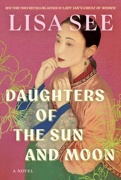 Daughters of the Sun and Moon
Beloved New York Times bestselling author Lisa See draws on the vibrancy and turmoil of post-Civil War Los Angeles to tell the story of three Chinese women who managed to survive and, eventually, thrive, despite all odds. ...More
|
 The Book WitchShe can hop into any novel, she just can't stay there. Come along with the book witch in this magical and inspiring love letter to reading from the USA Today bestselling author of The Wishing Game ... More
|
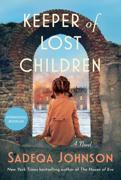 Keeper of Lost Children
In this new novel from the New York Times bestselling author of The House of Eve, one American woman's vision in post WWII Germany will tie together three people in an unexpected way....More
|
 My Husband's WifeThe New York Times bestselling Queen of Twists is back with a psychological masterpiece that will leave you questioning everything you know about love, identity, and revenge. By the author of His & Hers, now a #1 Netflix show!... More
|
You May Also Like: |


|
Visit Our Blog |
 |
Most Antipipated Books of 2026 ..... Our Favorites.
|
| |
 |
 |


