|
A Gentleman in Moscow |
by Amor Towles |
 |
Discussion Questions |
1) In the transcript at the opening of A Gentleman in Moscow, the head of the tribunal and Count Rostov have the following exchange: "Secretary Ignatov: I have no doubt, Count Rostov, that some in the galley are surprised to find you charming; but I am not surprised to find you so. History has shown charm to be the last ambition of the leisure class. What I do find surprising is that the author of the poem in question could have become a man so obviously without purpose. Rostov: I have lived under the impression that a man's purpose is known only to God. Secretary Ignatov: Indeed. How convenient that must have been for you." To what extent is A Gentleman in Moscow a novel of purpose? How does the Count's sense of purpose manifest itself initially, and how does it evolve as the story unfolds? 2) Over the course of Book Two, why does the Count decide to throw himself from the roof of the Metropol? On the verge of doing so, why does the encounter with the old handyman lead him to change his plans? 3) The Count's life under house arrest is greatly influenced by his relationship with four women: Nina, Marina, Anna, and Sofia. What is the nature of the Count's relationship with each of these women? How do those relationships differ from his relationship with the members of the Triumvirate-Andrey and Emile? 4) The majority of A Gentleman in Moscow is told in the third person from the Count's point of view. There is, however, an overarching narrator with a perspective different from the Count's. Initially, this narrator appears in footnotes, then in the "Addendums," then in the historical introductions of "1930," "1938," and "1946." How would you characterize this narrator? How does he differ from the Count in terms of his point of view and tone of voice? What is his role in the narrative? 5) In the "1946" chapter, Mishka, Osip, and Richard each share with the Count his perspective on the meaning of the revolutionary era. What are these three perspectives? Are you inclined to agree with one of them; or do you find there is some merit to each? 6) One of the pleasures of writing fiction is discovering upon completion of a project that some thread of imagery has run through the work without your complete awareness-forming, in essence, an unintentional motif. While I was very conscious of the recurrence of tolling bells, keys, and concentric circles in the book, here are a few motifs that I only recognized after the fact: Packages wrapped in brown paper, such as the Maltese Falcon, Mishka's book of quotations, the Russian nesting dolls discovered in the Italians' closet, and the Count's copy of Montaigne (in Paris). The likeness of stars, such as the freckles on Anna's back and the beacon on the top of the Shukhov radio tower. Sailors (often in peril), such as Robinson Crusoe, Odysseus, Admiral Makarov, and Arion in the myth of Delphinus. What role do any of these motifs play in the thematic composition of the book? And if you see me in an airport, can you explain them to me? 7) How does the narrative incorporate the passage of time, and does it do so effectively? Thematically speaking, how does the Count's experience of Time change over the course of the novel and how does it relate to his father's views as embodied by the twice-tolling clock? What does the novel suggest about the influence of individuals on history and vice versa? 8) At the opening of Book Five, the Count has already decided to get Sofia out of Russia. What occurs over the course of Book Four to lead him to this decision? Why does he choose to remain behind? 9) Near the novel's conclusion, what is the significance of the toppled cocktail glass in Casablanca? 10) This is a novel with a somewhat fantastical premise set half a century ago in a country very different from our own. Nonetheless, do you think the book is relevant today? If so, in what way? 11) Bonus Question: Who in the novel also appears in Rules of Civility? Discussion questions by the publisher
|


|
 |
Looking for your next group read? Explore 4+ years of curated picks that actually spark a conversation ....
|
More Must-Read Books |
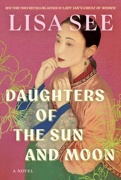 Daughters of the Sun and Moon
Beloved New York Times bestselling author Lisa See draws on the vibrancy and turmoil of post-Civil War Los Angeles to tell the story of three Chinese women who managed to survive and, eventually, thrive, despite all odds. ...More
|
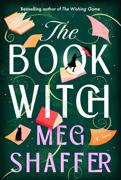 The Book WitchShe can hop into any novel, she just can't stay there. Come along with the book witch in this magical and inspiring love letter to reading from the USA Today bestselling author of The Wishing Game ... More
|
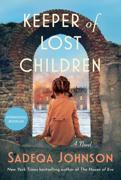 Keeper of Lost Children
In this new novel from the New York Times bestselling author of The House of Eve, one American woman's vision in post WWII Germany will tie together three people in an unexpected way....More
|
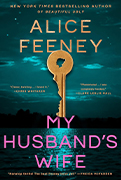 My Husband's WifeThe New York Times bestselling Queen of Twists is back with a psychological masterpiece that will leave you questioning everything you know about love, identity, and revenge. By the author of His & Hers, now a #1 Netflix show!... More
|
You May Also Like: |


|
Visit Our Blog |
 |
Most Antipipated Books of 2026 ..... Our Favorites.
|