|
Family Family |
by Laurie Frankel |
 |
Discussion Questions |
1. What books/movies/TV shows come to mind when you think about adoption? Or what have you read or watched recently that maybe wasn't about adoption but featured it as a plot point or character device? What sorts of messages about adoption do they convey? What sorts of messages surrounding adoption do you get from the news, social media, friends and family? How does Family Family fit in with or challenge these messages? 2. Fig and Jack make lists of scary things so they can rename them and make them their own thus the term "dwebs" (dweebs on the web). Why does their therapist recommend this approach to processing the trauma of their past and the challenges of their present? How does language bestow power? Do you have words or terms that are unique to your family or close relationships? 3. Robbie and India have a supportive, loving relationship, even though they're so young. What effect does this relationship have on India going forward, even after they break up? What about on Robbie? 4. Family Family is told across two different timelines. How does seeing India's past unfold contribute to your understanding of her decisions as an adult? How does her childhood and adolescence compare to that of any of her children? 5. What role do index cards play in India's life? How much of her success is raw talent, and how much is grit or determination or hard work, and how much is shrewd compromise? Please note: In order to provide book clubs with the most informed and thoughtprovoking questions possible, it is necessary to reveal aspects of the story, as well as the ending. If you have not finished reading Family Family, you may want to wait before reviewing this guide. 6. How does India's relationship with Davis differ from her relationship with Robbie? When faced with unexpected pregnancies, how do Davis and Robbie respond differently, both immediately and years later? 7. On page 203, India observes that a dream job is still a job. How are India's lifelong dreams realized and how are they not? When she gets what she wants, is it different than she imagined? What does she give up along the way, and why? What are your own dream jobs? How do you find or imagine them to be dreamy and how job-like? 8. What double standards and biases does India face as a woman trying to make art? How does this change (and not) throughout her life? 9. Over the course of this story, India manages to anger adoptees, adoption advocates, abortion advocates, anti abortion advocates, social media users, the press, her fans, and her own bosses. Whose ire seems reasonable and whose decidedly not? What effect do all these voices have on her life, family, and career? What effect do similar voices have on your life (or is it different when you don't play a superhero Viking on TV)? 10. Fig and Jack have very different responses to their trauma. How does each deal and deal differently with what happened to them and with the world they grow up in? How does each change over the course of the story as their family expands again? 11. Did the existence of Lewis surprise you? Why or why not? 12. The kids all have very different experiences with and ideas about being adopted. They have different feelings about their relationships with their birth families as well. How do they compare and contrast, and to what do you attribute their different takes? How do other issues of identity besides adoption for instance, race, sexuality, trauma affect their different experiences? If you have adoption in your own family, how do your experiences, feelings, and ideas compare and contrast with the ones in this book? 13. Were you surprised that India decided to become an adoptive parent herself? Did you assume Fig and Jack were adopted from the beginning, or did the revelation come later? How is the adoption she undertakes to become a parent different from the ones she undertook in high school and college? What does she have in common with and how does she differ from Jack and Fig's birth mother? 14. On page 262, India's mother tells her: "This is what parenting is, India. Solving impossible-to-solve problems while also experiencing deep crises of faith while also being kind of annoyed while also never getting enough rest. These problems only ever go away by changing into different equally impossible problems. This is how it always is for all parents, no matter how you came by your children." How is India's experience of motherhood the same and different from her mother's? From Camille's? How do her experiences with adoption, both placing children for adoption and becoming an adoptive parent herself, influence her relationship to motherhood? 15. Fig, Jack, Bex, and Lewis don't grow up together (or sometimes even know about one another). Personality-wise and circumstantially, they're very different. In what ways do they behave like siblings anyway? How do the adults India, Robbie, Davis, Camille, and the Andrews behave like family as well? 16. On page 356, Bex realizes: "India and Robbie were her parents, not in every way, but in some ways. But in some ways, she was also theirs. They had given her life, but she had given them lives, these lives, and not only them but a lot of other people too." How has Bex shaped India's and Robbie's lives even though they haven't seen her in sixteen years? How do children shape their parents' lives as much as the other way around? Discussion Questions by The Publisher
|


|
 |
Looking for your next group read? Explore 4+ years of curated picks that actually spark a conversation ....
|
More Must-Read Books |
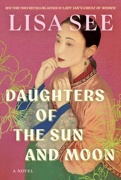 Daughters of the Sun and Moon
Beloved New York Times bestselling author Lisa See draws on the vibrancy and turmoil of post-Civil War Los Angeles to tell the story of three Chinese women who managed to survive and, eventually, thrive, despite all odds. ...More
|
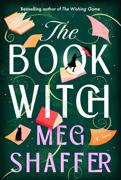 The Book WitchShe can hop into any novel, she just can't stay there. Come along with the book witch in this magical and inspiring love letter to reading from the USA Today bestselling author of The Wishing Game ... More
|
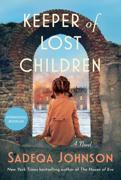 Keeper of Lost Children
In this new novel from the New York Times bestselling author of The House of Eve, one American woman's vision in post WWII Germany will tie together three people in an unexpected way....More
|
 My Husband's WifeThe New York Times bestselling Queen of Twists is back with a psychological masterpiece that will leave you questioning everything you know about love, identity, and revenge. By the author of His & Hers, now a #1 Netflix show!... More
|
You May Also Like: |


|
Visit Our Blog |
 |
Most Antipipated Books of 2026 ..... Our Favorites.
|